AI Inventory Management for Small E-commerce Businesses
Inventory management is where small e-commerce businesses quietly bleed money.
Not in a dramatic way — no single catastrophic loss. Just a steady drip: capital tied up in products sitting on shelves too long. Lost sales from stockouts on popular items. Emergency reorders at premium shipping rates. Markdowns on seasonal products ordered too aggressively.
For a store doing $30,000-$100,000 monthly, poor inventory management can easily cost 10-15% of revenue. That's $3,000-$15,000 per month — often more than the owner's salary.
AI inventory management promises to fix this. But is it actually practical for small businesses, or is it another enterprise-only technology that sounds great in blog posts?
Let me give you an honest answer.

What AI Inventory Management Actually Means
Let's strip away the buzzwords. AI inventory management does three things:
- Demand forecasting: Predicting how much of each product you'll sell in the coming days, weeks, or months.
- Reorder optimization: Calculating when to reorder and how much to order, balancing carrying costs against stockout risk.
- Anomaly detection: Flagging unusual patterns — sudden demand spikes, slow-moving inventory that needs attention, seasonal shifts happening earlier than expected.
Traditionally, small store owners do this with gut instinct and spreadsheets. They order more of what sold well last month and less of what didn't. It works okay until it doesn't — and "doesn't" usually means either a warehouse full of unsold Christmas stock in January or being out of your best-seller during peak season.
AI replaces gut instinct with statistical models that consider more variables than any human can track simultaneously.
The Small Business Reality Check
Before diving into tools, let's be honest about constraints.
You don't have "big data." A store with 300 products and 500 orders per month has limited historical data. Most AI inventory tools are designed for retailers processing thousands of orders daily.
Your patterns are noisy. With low volume, a single large order or a TikTok mention can wildly distort demand signals. AI models need to distinguish real trends from noise, and that's harder with small datasets.
You probably can't afford dedicated software. Enterprise inventory optimization tools (Blue Yonder, o9 Solutions, Kinaxis) cost tens of thousands per year. That's a non-starter.
You wear many hats. You don't have an inventory analyst. The AI tool needs to be something you configure once and it largely runs itself.
Good news: several tools have emerged in the last two years that specifically address these constraints.
Demand Forecasting: What's Practical
For Stores with 3-6 Months of Data
You need at minimum 3 months of sales data for any meaningful forecasting. With 3-6 months, here's what works:
Moving averages with trend detection. The simplest useful approach: look at the last 4-8 weeks of sales, calculate a weighted average (recent weeks weighted more), and add a trend component. If sales grew 10% month-over-month for three months, project that forward.
You can do this in a spreadsheet, but several WooCommerce plugins automate it:
- Stock Sync for WooCommerce — Basic demand forecasting based on sales velocity
- Smart Manager — Bulk inventory management with simple demand predictions
- ATUM Inventory Management — More comprehensive, includes basic forecasting
Expected accuracy: 60-70% for stable products. Less reliable for seasonal or trending items.
For Stores with 6-12+ Months of Data
With a year of data, AI forecasting becomes significantly more powerful because it can detect seasonal patterns.
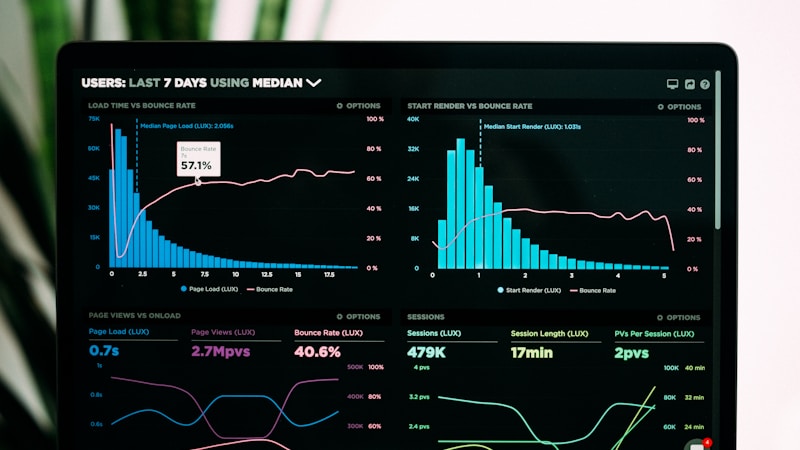
What AI adds over spreadsheets:
- Seasonal decomposition: Automatically identifies that Product X sells 3x more in December and adjusts forecasts accordingly
- Day-of-week patterns: Some products sell more on weekends. AI catches this.
- Correlation detection: When Product A sales spike, Product B usually follows two weeks later. AI spots these relationships.
- External factors: Some tools incorporate weather data, holidays, and even social media trends into forecasts.
Available tools:
- Inventory Planner (by Sage) — Purpose-built for SMB inventory forecasting. Connects to WooCommerce. $99-249/month. Probably the best balance of power and accessibility for small stores.
- Stockly — AI-powered demand forecasting for e-commerce. Newer but promising. From $49/month.
- Prediko — Designed for DTC brands. Demand forecasting + purchase order automation. From $99/month.
- Katana — Manufacturing-focused but works for e-commerce. Includes demand forecasting. From $99/month.
Expected accuracy: 75-85% for established products with seasonal patterns. Still limited for new products or highly volatile categories.
Reorder Optimization: The Money Saver
Forecasting tells you what will sell. Reorder optimization tells you when to buy and how much.
This is where AI saves real money, because the math involves balancing multiple competing costs:
- Carrying cost: Capital tied up in inventory, storage fees, insurance, depreciation
- Stockout cost: Lost sales, damaged customer relationships, competitors gaining ground
- Ordering cost: Shipping fees (often lower per unit for larger orders), supplier minimum order quantities, lead time variability
The classic approach is the Economic Order Quantity (EOQ) formula, which has been around since 1913. It works but assumes constant demand and reliable lead times — neither of which is true in practice.
AI reorder optimization improves on EOQ by:
Dynamically adjusting safety stock. Instead of keeping a fixed buffer ("always keep 2 weeks of stock"), AI calculates the optimal safety stock for each product based on demand variability, lead time variability, and acceptable stockout risk.
For a product with stable demand and a reliable supplier: minimal safety stock needed. For a product with volatile demand and a 2-week lead time that sometimes stretches to 4 weeks: much more buffer required.
Grouping purchase orders. If you buy five products from the same supplier, AI can consolidate orders to minimize shipping costs while ensuring each product arrives before its projected stockout date.
Accounting for cash flow. Some AI tools let you set cash constraints: "I can spend max $5,000 on inventory this month." The optimizer allocates that budget across products to minimize total stockout risk.

Practical Implementation
For most small WooCommerce stores, here's the implementation path:
Step 1: Establish baselines. Before adding any AI tool, document your current state:
- Current inventory levels for your top 50 products
- Average days of stock on hand
- Stockout frequency (how often are products unavailable?)
- Dead stock value (products that haven't sold in 90+ days)
Step 2: Start with velocity-based reordering. Calculate sales velocity (units per day) for each product. Set reorder points at: (daily velocity x lead time in days) + safety stock. This alone beats gut-feeling ordering.
Step 3: Add a forecasting tool. Connect Inventory Planner or similar to your WooCommerce store. Let it analyze 3-6 months of data before trusting its recommendations. Compare its suggestions against your intuition — where do they differ and why?
Step 4: Automate gradually. Start with automated reorder alerts ("Product X will stock out in 12 days, suggest ordering 50 units"). Once you trust the system, enable auto-generated purchase orders for your most stable products.
Stock Optimization: The Hidden Wins
Beyond forecasting and reordering, AI can optimize your overall inventory strategy.
ABC Analysis on Autopilot
Classic inventory management categorizes products:
- A items: Top 20% of products generating 80% of revenue. High attention, tight stock control.
- B items: Middle 30% generating 15% of revenue. Moderate attention.
- C items: Bottom 50% generating 5% of revenue. Minimal attention, lower stock levels.
AI takes this further by dynamically reclassifying products. A product that was C-class last quarter might be trending upward and deserves B-class attention. A former A-class product might be declining. Manual ABC analysis is a quarterly exercise at best; AI does it continuously.
Dead Stock Identification
Every store has dead stock — products that haven't sold in months and probably won't sell at full price. AI identifies these earlier than gut instinct and recommends actions:
- Discount to clear (and by how much to optimize revenue vs. clearance speed)
- Bundle with popular products
- Return to supplier if possible
- Write off and free up storage/capital
The earlier you act on dead stock, the less money you lose. AI typically identifies slow-moving inventory 30-60 days before a human would notice.
Seasonality Preparation
For stores with seasonal products, AI provides specific guidance:
- When to start increasing orders for seasonal items
- How much seasonal stock to carry based on last year + growth trend
- When to start discounting remaining seasonal stock
- Which seasonal products to skip entirely this year based on trend data
What AI Can't Do (Yet)
Being honest about limitations:
Predict viral moments. If a TikTok influencer features your product tomorrow, no AI will have predicted that demand spike. The best you can do is have anomaly detection that alerts you quickly.
Handle brand-new products. No sales history means no demand forecast. AI can use similar product performance as a proxy, but new product inventory is still largely a judgment call.
Replace supplier relationships. AI tells you what to order and when, but negotiating lead times, payment terms, and minimum quantities is a human skill. Good supplier relationships often matter more than perfect algorithms.
Work with bad data. If your WooCommerce inventory counts are inaccurate (common when not doing regular stock takes), AI forecasting will be wrong. Garbage in, garbage out. Fix your data first.
The WooCommerce-Specific Toolkit
Here's my recommended stack for a WooCommerce store with 200-1,000 products:
| Need | Tool | Cost |
|---|---|---|
| Inventory tracking | ATUM Inventory Management (free) | $0 |
| Basic forecasting | WooCommerce Analytics + Spreadsheet | $0 |
| AI forecasting | Inventory Planner | $99-249/mo |
| Reorder automation | Inventory Planner or Prediko | $99-249/mo |
| Dead stock alerts | Custom WooCommerce report or ATUM | $0-49 |
Total cost for a meaningful AI inventory setup: $99-249/month. For a store doing $50,000/month in revenue, this should reduce inventory costs by at least $2,000-5,000/month through fewer stockouts, less dead stock, and optimized ordering.

Connecting Inventory to Customer Experience
Here's something most inventory management articles miss: inventory directly affects customer experience and AI product matching.
When AI-powered search and cart-filling recommends a product that's out of stock, that's a terrible experience. The smarter your inventory management, the fewer stockout disappointments your customers face.
List AI, for example, factors stock availability into product matching. If a product is running low, the system can proactively suggest alternatives before the stockout happens. But this only works if inventory levels are accurate and actively managed.
Similarly, AI cross-selling becomes more effective when you can prioritize recommending products with healthy stock levels. Selling what you have too much of, while ensuring you don't run out of what you're promoting — that's the intersection of inventory intelligence and sales intelligence.
Getting Started This Week
Don't try to boil the ocean. Here's a realistic week-one plan:
Monday: Export your WooCommerce order data for the last 6 months. Calculate sales velocity for your top 30 products.
Tuesday: Identify your current dead stock. Any product with zero sales in 60+ days goes on a watchlist.
Wednesday: Set up reorder points for your top 30 products using the formula: (daily velocity x lead time) x 1.5 (the 1.5 is a simple safety stock buffer).
Thursday: Sign up for a free trial of Inventory Planner or similar. Connect your WooCommerce store and let it analyze your data.
Friday: Compare the tool's initial forecasts to your gut feeling. Where do they disagree? Investigate why.
Within a month, you'll have a data-driven reorder system that's better than anything you've had before. And over the following months, as the AI learns your patterns, it'll only get sharper.
The Bottom Line
AI inventory management for small e-commerce businesses isn't science fiction — it's practical, affordable, and available today. You won't get the sophistication of Amazon's systems, but you don't need it.
What you need is: better demand forecasting than gut instinct, automated reorder alerts that prevent stockouts, and early identification of dead stock before it eats your margins.
The tools exist. They cost less than one bad inventory decision per month. And they get better with every month of data they collect.
Stop managing inventory with spreadsheets and hope. Start managing it with data and intelligence. Your cash flow will thank you.