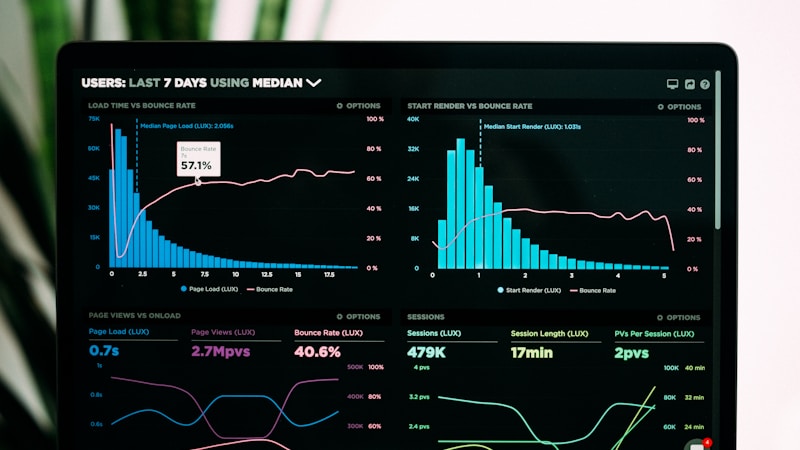
Page speed is the most underrated conversion factor in e-commerce. Every extra second of load time drops your conversion rate by approximately 7%. A store that loads in 2 seconds converts meaningfully better than one that loads in 5 seconds — same products, same prices, same everything else.
WooCommerce stores face a particular speed challenge. WordPress is PHP-based, WooCommerce adds database queries for products, cart sessions, and dynamic pricing, and most stores pile on plugins that each add their own CSS and JavaScript. The result is a store that starts fast and gets slower with every feature you add.
The good news: speed optimization for WooCommerce is a solved problem. The right combination of caching, CDN, and optimization plugins can make almost any WooCommerce store load in under 3 seconds.

Understanding What Makes WooCommerce Slow
Before choosing plugins, understand the bottleneck categories:
Server Response Time (TTFB)
Time To First Byte — how long the server takes to start sending the page. WooCommerce is PHP, so every page request runs PHP code and database queries. On shared hosting, this is often 1-3 seconds alone.
Fix: Caching (serves pre-built pages instead of running PHP every time) and better hosting.
Render-Blocking Resources
CSS and JavaScript files that must download and execute before the page displays. Each plugin adds its own files. A store with 20 plugins might load 15+ CSS files and 20+ JavaScript files.
Fix: Minification, combination, and defer/async loading.
Image Size
Product images are typically the heaviest resources on an e-commerce page. A category page with 20 products loading unoptimized images can easily be 10MB+.
Fix: Image compression, WebP conversion, and lazy loading.
Third-Party Scripts
Facebook Pixel, Google Analytics, chat widgets, review platforms — each adds external JavaScript that you can't fully control.
Fix: Delay loading until user interaction, or load asynchronously.
Caching Plugins: The Biggest Speed Win
Caching is the single most impactful speed optimization. It pre-generates HTML pages so the server doesn't run PHP and database queries on every visit.
WP Rocket (Best Overall)
Price: From $59/year (single site)
What it does: Page caching, browser caching, CSS/JS minification and combination, lazy loading, database optimization, preloading — all in one plugin with a thoughtful default configuration.
Strengths:
- Works well out of the box with sensible defaults
- WooCommerce-aware: automatically excludes cart, checkout, and my account pages from cache
- CSS/JS optimization (minify, combine, defer)
- Lazy loading for images and iframes
- Database cleanup
- Preload cache (proactively generates cached pages)
- CDN integration
- Excellent documentation and support
Weaknesses:
- No free version
- Annual license (not lifetime)
- Can conflict with other optimization plugins if you stack too many
Verdict: The best option for most WooCommerce stores. It handles caching, optimization, and lazy loading in one plugin, reducing the need for multiple optimization tools. Setup takes 15 minutes.
LiteSpeed Cache
Price: Free (requires LiteSpeed or OpenLiteSpeed server)
What it does: Similar to WP Rocket but free — with a major caveat: your hosting must run LiteSpeed web server (not Apache or Nginx).
Strengths:
- Free
- Server-level caching (faster than PHP-based caching)
- Image optimization via QUIC.cloud CDN
- Object cache support
- Comprehensive optimization features
Weaknesses:
- Only works on LiteSpeed servers
- More complex configuration
- Some features require QUIC.cloud credits
Verdict: If your hosting runs LiteSpeed (many quality hosts do — Cloudways, A2 Hosting, Hostinger), this is the best free option. If you're on Apache or Nginx, it won't work.
W3 Total Cache
Price: Free (Pro from $99/year)
What it does: The most configurable caching plugin. Supports page cache, object cache, database cache, browser cache, and CDN integration.
Strengths:
- Free version is full-featured
- Extremely configurable
- Supports multiple caching methods (disk, Memcached, Redis)
- Object cache support
Weaknesses:
- Configuration is complex — easy to misconfigure
- Can break WooCommerce if cart/checkout pages aren't properly excluded
- Interface is intimidating
- Potential conflicts with other plugins
Verdict: Powerful but risky for non-technical users. If you know what you're doing, it's excellent. If you don't, WP Rocket is a safer choice.
WP Super Cache
Price: Free
What it does: Simple page caching from Automattic (the WordPress company).
Strengths:
- Free and reliable
- Simple configuration
- Made by Automattic — good WordPress compatibility
Weaknesses:
- Page caching only — no CSS/JS optimization, no lazy loading
- Limited features compared to WP Rocket or LiteSpeed
- You'll need additional plugins for full optimization
Verdict: Fine as a basic caching layer if you're on a tight budget. But you'll need other plugins for complete optimization.
CDN: Serving Assets From Everywhere
A Content Delivery Network stores copies of your static files (images, CSS, JS) on servers worldwide. When a visitor in Tokyo loads your store hosted in Frankfurt, the images come from a Tokyo server instead of crossing the globe.
Cloudflare (Best Free Option)
Free tier includes:
- Global CDN for static assets
- Free SSL certificate
- DDoS protection
- Basic firewall
- Page rules (limited)
Pro ($20/month) adds:
- Image optimization (Polish, Mirage)
- Better performance features
- Enhanced firewall
Verdict: Every WooCommerce store should use Cloudflare's free tier at minimum. The CDN and DDoS protection alone are worth the 15-minute setup.
BunnyCDN
Price: Pay-per-use, starting around $1/month for small stores
Very affordable CDN with pull zones that work well with WordPress. Faster than Cloudflare's free tier in some regions. Integration via BunnyCDN WordPress plugin.
Verdict: Best value-for-money CDN if Cloudflare's free tier isn't fast enough.
CloudFront (AWS)
Amazon's CDN. Extremely reliable and fast. More complex to set up but integrates well if you're already on AWS.
Verdict: Best for stores already using AWS infrastructure. Overkill for most small stores.
Image Optimization Plugins
Images are typically 60-80% of a page's total weight. Optimizing them is the second-biggest speed win after caching.
ShortPixel
Price: Free (100 images/month), from $3.99/month for more
What it does: Compresses images (lossy or lossless), converts to WebP/AVIF, serves via CDN.
Strengths:
- Excellent compression with minimal quality loss
- WebP and AVIF conversion
- Bulk optimization of existing images
- Adaptive images CDN (serves right size for device)
Verdict: Best image optimization plugin. The lossy compression typically reduces file size by 60-80% with no visible quality difference.
Imagify
Price: Free (20MB/month), from $5.99/month
Made by the WP Rocket team. Similar to ShortPixel with tight WP Rocket integration.
Verdict: Choose Imagify if you're already using WP Rocket for seamless integration. Choose ShortPixel if you want better pricing.
EWWW Image Optimizer
Price: Free (limited), from $7/month
Can compress locally (on your server) without sending images to external servers. Good for stores with privacy concerns about sending product images to third parties.
JavaScript and CSS Optimization
If you're using WP Rocket, it handles most of this. If not, dedicated plugins can help:
Autoptimize (Free)
Minifies and combines CSS/JavaScript. Simple configuration. Works well alongside basic caching plugins like WP Super Cache.
Asset CleanUp (Freemium)
Lets you selectively unload CSS/JS files on specific pages. A product page doesn't need the contact form plugin's CSS. Asset CleanUp lets you remove it.
This is a power-user tool but can significantly reduce unused CSS/JS. Test carefully — removing the wrong asset breaks pages.

Object Caching: The Often-Missed Layer
Page caching helps logged-out visitors. But WooCommerce has many dynamic pages (cart, checkout, account) that can't be page-cached. Object caching helps here by caching database query results in memory.
Redis
The preferred object cache for WooCommerce. Requires server-level installation (your host needs to support it). Use the Redis Object Cache plugin to connect WordPress to Redis.
Memcached
Similar to Redis but less feature-rich. Still effective for object caching.
Do You Need Object Caching?
If your store gets fewer than 500 visitors/day, probably not. The impact is most noticeable on:
- Stores with large catalogs (5,000+ products)
- High-traffic stores (1,000+ concurrent visitors)
- Stores with complex product queries (variable products, custom filtering)
My Recommended Speed Stack
Budget Setup (Free)
- WP Super Cache — Basic page caching
- Cloudflare Free — CDN + SSL
- ShortPixel Free — Image compression (100/month)
- Autoptimize — CSS/JS minification
Optimal Setup ($60-80/year)
- WP Rocket ($59/year) — Caching, optimization, lazy loading
- Cloudflare Free — CDN + DDoS protection
- ShortPixel ($3.99/month) — Image compression + WebP
High-Performance Setup ($100-200/year)
- WP Rocket ($59/year)
- Cloudflare Pro ($20/month) or BunnyCDN
- ShortPixel ($3.99/month)
- Redis Object Cache (usually included with managed hosting)
- Asset CleanUp (free) — Remove unused CSS/JS per page
Speed Optimization Checklist
Beyond plugins, these server-side and configuration changes make a big difference:
Hosting
- Use managed WordPress hosting (Cloudways, Kinsta, WP Engine, or a VPS). Shared hosting is the #1 speed bottleneck for most stores.
- Enable PHP 8.2+. PHP 8.x is significantly faster than PHP 7.x.
- Use HTTP/2 or HTTP/3. Most modern hosts support this.
WordPress Configuration
- Limit post revisions:
define('WP_POST_REVISIONS', 5);in wp-config.php - Increase memory:
define('WP_MEMORY_LIMIT', '256M'); - Disable WP-Cron and use server cron instead (prevents cron from running on page loads)
Plugin Audit
- Deactivate unused plugins. Even deactivated plugins don't affect speed, but actually delete ones you don't use.
- Check each plugin's impact. Use Query Monitor plugin to see which plugins add the most load time.
- Consolidate overlapping plugins. Two SEO plugins, two security plugins, two caching plugins — pick one of each.
For a broader look at performance and infrastructure decisions, see our guide on scaling WooCommerce stores.
Measuring Speed: The Right Metrics
Don't just look at one speed test. Measure these:
- TTFB (Time to First Byte): Under 200ms is good. Over 600ms means server issues.
- LCP (Largest Contentful Paint): Under 2.5s. This is what Core Web Vitals measures.
- FID/INP (Interaction responsiveness): Under 100ms/200ms. How quickly the page responds to clicks.
- CLS (Cumulative Layout Shift): Under 0.1. Visual stability — does the page jump around while loading?
Tools:
- PageSpeed Insights (Google) — Free, shows Core Web Vitals
- GTmetrix — Detailed waterfall analysis
- WebPageTest — Advanced testing from multiple locations
Test from multiple locations and devices. A store that loads in 1.5s from the US might load in 4s from Europe if you don't have a CDN.
Common Speed Optimization Mistakes
Using too many optimization plugins. WP Rocket + Autoptimize + another caching plugin = conflicts and potentially slower performance. Pick one comprehensive solution.
Over-minifying JavaScript. Aggressive JS optimization can break WooCommerce checkout, payment gateways, and interactive features. Always test checkout after making optimization changes.
Not testing on mobile. Your mobile visitors (60%+ of traffic) have slower connections and less powerful devices. Test speed on mobile specifically.
Ignoring hosting. No amount of caching fixes a $3/month shared host with 200 other websites. If TTFB is over 600ms, upgrade hosting before buying optimization plugins.
Forgetting to test WooCommerce pages. Cache plugins often exclude cart/checkout. Test these dynamic pages specifically — they're where speed matters most for conversion.
The Bottom Line
Speed optimization for WooCommerce follows the 80/20 rule: caching, CDN, and image optimization deliver 80% of the improvement. Everything else is fine-tuning.
Start with WP Rocket + Cloudflare Free + ShortPixel. Measure your Core Web Vitals before and after. If you're still slow, look at hosting quality and plugin bloat before adding more optimization tools.
A fast store isn't just better for SEO — it's better for revenue. Every second you shave off load time is money you're leaving on the table. Pair speed optimization with strong security and proper analytics tracking to build a store that's fast, safe, and data-driven.
List AI's AI-powered cart filling widget is built for speed — 84KB gzipped, Shadow DOM isolated, with zero impact on your store's page load performance.